Delinquent Property Taxes in California
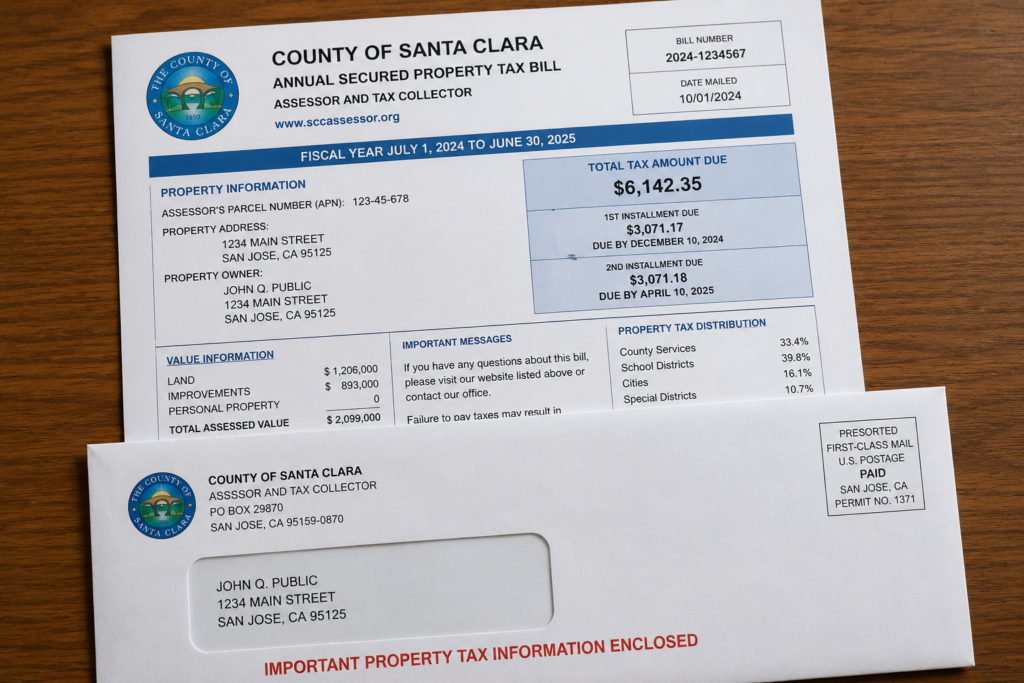
If you’ve fallen behind on your California property taxes, you’re probably wondering how much time you have, what happens next, and whether you could lose your home.
The good news is that falling behind on property taxes does not mean you’ll lose your property immediately. California’s tax sale process usually takes several years, giving many homeowners time to catch up on their taxes, sell the property, or explore other solutions.
This updated guide explains how California’s property tax default process works as of 2026, what happens if you don’t pay, and the options available before the situation becomes more serious.
In This Guide:
- Why Property Taxes Become Delinquent
- Proposition 19 and Higher Property Taxes
- California Property Tax Delinquency Timeline
- Can You Lose Your Home for Unpaid Property Taxes?
- What Is a California Tax Sale?
- How Fast a Small Tax Balance Can Grow
- Not Sure How Much You Really Owe?
- Your Options When You’re Behind on Property Taxes
- Why Waiting Usually Costs More
- FAQ
Why Property Taxes Become Delinquent
There is rarely just one reason.
Many of the homeowners I speak with are dealing with one or more of the following situations:
- Inherited a property and were surprised by a much higher property tax bill
- Financial hardship due to job loss, medical expenses, divorce, or other unexpected events
- A vacant property that generates no income
- A rental property with non-paying tenants
- Living out of the area and missing important tax notices
- Property tax reassessment after a transfer of ownership under Proposition 19
No matter how it happened, the important thing is understanding your options before additional penalties and interest continue to accumulate.
Proposition 19 and Higher Property Taxes
One of the biggest reasons I’ve seen homeowners fall behind on property taxes is Proposition 19.
If you inherited a home from your parents or another family member after February 16, 2021, your property taxes may have increased substantially because the property was reassessed at its current market value.
Many families are caught completely off guard by the new tax bill.
If that’s your situation, I recommend reading my guide:
Proposition 19: What California Homeowners Should Know About Inherited Property and Property Taxes
Understanding why your taxes increased is the first step toward deciding what to do next.
California Property Tax Delinquency Timeline
Many homeowners assume they’ll lose their home after missing one payment.
Fortunately, that’s not how California’s system works.
Here’s the typical timeline:
April 10
The second installment of property taxes is due.
After April 10
Penalties begin to accrue on unpaid taxes.
July 1
If the taxes remain unpaid, the property becomes tax-defaulted.
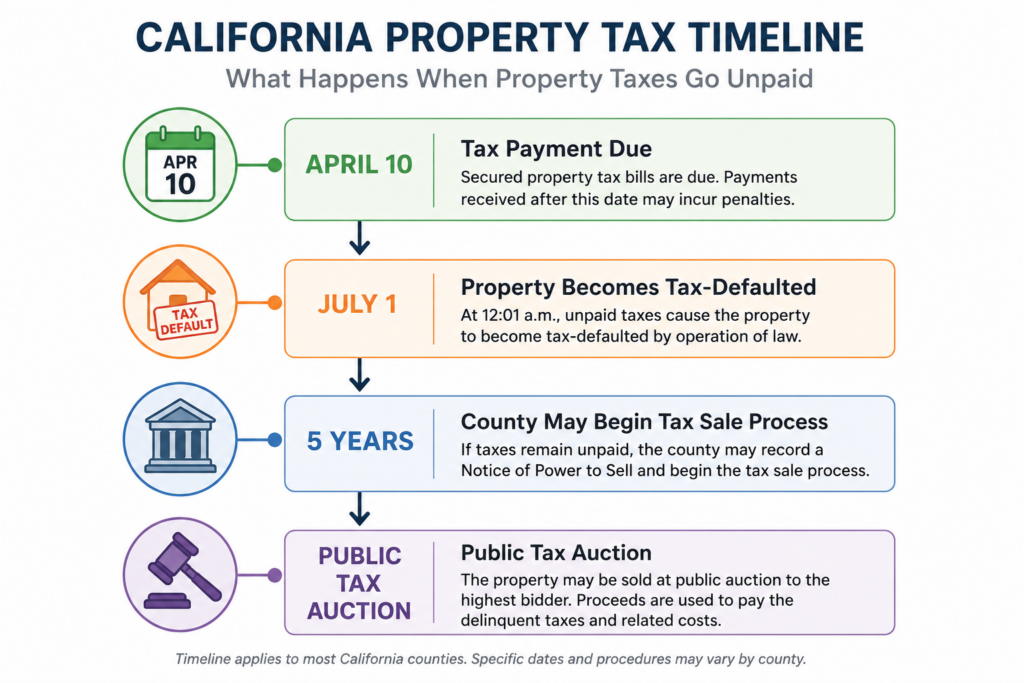
Additional penalties and costs continue to accumulate.
Five Years After Default
For most residential properties, if the taxes remain unpaid for five years, the county tax collector may begin the tax sale process.
(Some non-residential properties may qualify sooner.)
Before the Auction
Before the property is sold, homeowners generally still have redemption rights, allowing them to pay the required amount and prevent the tax sale before the redemption period expires.
Every county follows California law, although exact procedures and notices may vary slightly.
Can You Lose Your Home for Unpaid Property Taxes?
Yes—but not immediately.
California provides homeowners with several years to resolve delinquent property taxes before a tax sale can occur.
Many homeowners are surprised to learn they still have options, even after receiving documents such as a Notice of Power to Sell Tax-Defaulted Property or other notices from their county tax collector.
The key is taking action before the redemption period expires.
Waiting simply gives penalties and interest more time to grow.
What Is a California Tax Sale?
If property taxes remain unpaid long enough, the county tax collector may schedule the property for a public tax auction.
At the auction, investors bid on the property.
Once the redemption period has ended and the sale is completed, the previous owner generally loses ownership of the property.
Because of this, many homeowners decide to sell before the auction rather than risk losing the equity they’ve built over the years.
How Fast a Small Tax Balance Can Grow
One of the biggest surprises for homeowners is how quickly unpaid taxes increase.
For example, imagine you owe $5,000 in delinquent property taxes.
Left unpaid, that amount can eventually grow to $7,000, $8,000, $9,000—or even more, depending on how long the taxes remain unpaid and the penalties and costs that accumulate.
The increase comes from:
- Initial delinquency penalties
- Ongoing charges and costs
- Interest and additional fees over time
The longer the taxes remain unpaid, the more difficult they become to catch up.
Not Sure How Much You Really Owe?
Many homeowners aren’t sure:
- How much they actually owe
- Whether the amount shown online is current
- How much time they have before more serious action begins
- What their best financial option might be
County websites often display terms like:
- Tax Default
- Redemption Amount
- Pending Balance Transfer
- Notice of Power to Sell
These terms can be confusing, and the online balance isn’t always the exact payoff amount.
If you’re unsure where you stand, I’m happy to help you understand your situation.
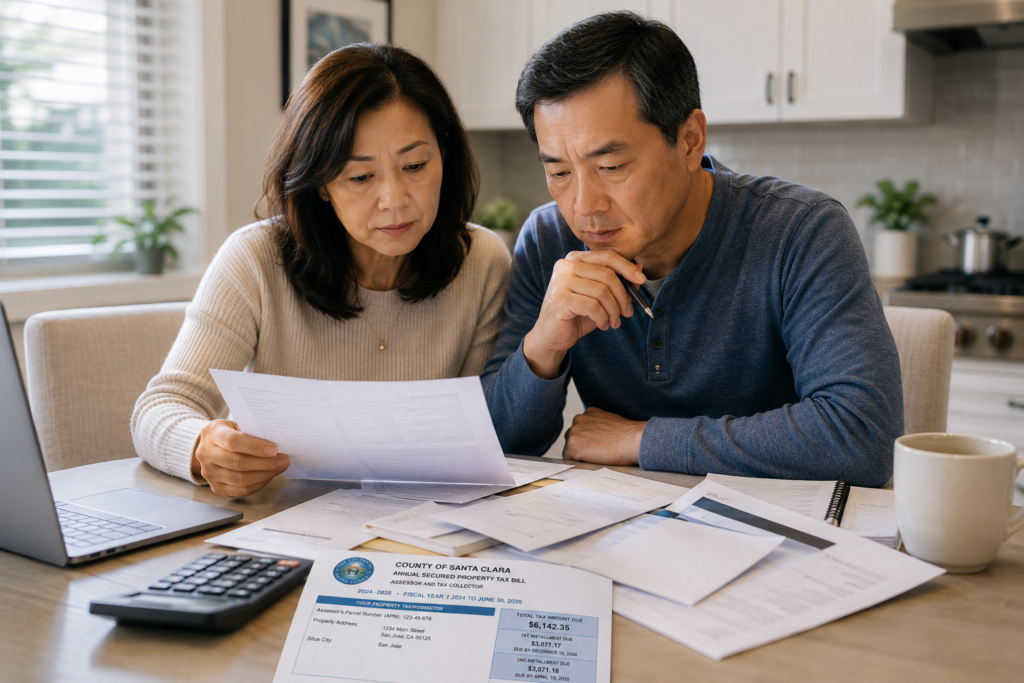
Your Options When You’re Behind on Property Taxes
Every homeowner’s situation is different.
Here are the most common options.
Option 1 — Pay the Delinquent Taxes
If you have the available funds, paying the delinquent taxes immediately stops additional penalties from accumulating and keeps the property in good standing.
Option 2 — Payment Plan
Some California counties offer installment payment plans for qualifying homeowners.
Availability depends on the county and your specific situation.
Contact your county tax collector for details.
Option 3 — Sell the Property
Selling the property is often the simplest solution when catching up on delinquent taxes isn’t financially realistic.
During escrow, delinquent property taxes are typically paid from the sale proceeds, allowing the transaction to close with clear title.
Depending on your goals, you may choose:
- A traditional MLS sale
- An as-is cash sale
- An investor purchase with a flexible closing date
Option 4 — Refinance
Refinancing may be possible in some situations.
However, many lenders require property taxes to be current before approving a new loan, making this option unavailable for some homeowners.
Why Waiting Usually Costs More
One thing I’ve learned after helping homeowners for many years is that most people don’t ignore delinquent taxes because they don’t care.
They delay because they feel overwhelmed.
Many don’t know where to start.
Others hope they’ll figure it out later.
Unfortunately, time is usually the biggest enemy.
Every month that passes can mean:
- More penalties
- More interest
- More stress
- Fewer available options
The sooner you understand your choices, the more flexibility you’ll usually have.
Frequently Asked Questions
How many years before California can sell my property for unpaid property taxes?
For most residential properties, the county may begin the tax sale process after the property has been tax-defaulted for five years.
Can I sell my house if I owe delinquent property taxes?
Yes.
In most cases, the delinquent taxes are paid from the proceeds during escrow.
Will delinquent property taxes affect my credit?
Property tax delinquency itself is generally not reported the same way as late credit card or mortgage payments, but it can lead to serious financial consequences if left unresolved, including the eventual loss of the property through a tax sale.
Can I make payments instead of paying everything at once?
Some counties offer installment payment plans for qualifying taxpayers.
Check with your county tax collector to determine whether you qualify.
What if I inherited the property?
Inherited properties are one of the most common situations that lead to delinquent property taxes, especially after Proposition 19 changed California’s reassessment rules.
If you’ve inherited a home and aren’t sure whether to keep it, rent it, or sell it, it’s worth understanding all of your options before additional taxes continue to accumulate.
How I Help Homeowners Behind on Property Taxes
I’m Eddie Lam, a Bay Area Realtor®, real estate investor, and homeowner advocate since 2008.
Depending on your situation, the right solution may be keeping the property, selling it on the open market, or selling it as-is for cash. I’ll explain the pros and cons of each approach so you can make the decision that’s right for you.
Over the years, I’ve worked with homeowners facing situations such as:
- Delinquent property taxes
- Inherited properties
- Probate sales
- Reverse mortgages
- Vacant homes
- Financial hardship
- Out-of-area ownership
Every situation is different.
Sometimes the best solution is simply paying the taxes and keeping the property.
Other times, when time is critical or repairs are overwhelming, an as-is cash sale may be the better option.
Because I’m both a licensed real estate professional and an experienced real estate investor, I can explain the advantages and disadvantages of each approach so you can decide which option best fits your goals.
My job isn’t to pressure you into selling—it’s to help you understand your choices so you can make an informed decision.
Related Resources
You may also find these guides helpful:
- Reverse Mortgage: What Happens When the Homeowner Passes Away?
- Proposition 19: What California Homeowners Should Know
- Selling an Inherited House in California
- California Probate Real Estate Guide
Get a Free, No-Obligation Property Review
If you’re behind on property taxes, I’d be happy to review your situation with you.
I’ll help you understand:
- Approximately how much is owed
- Where you are in the process
- Your available options
- What your property may be worth today
If selling turns out to be your best option, I can also explain the differences between selling on the open market and selling for cash, so you can decide which approach makes the most sense for your goals.
There is no obligation and no pressure—just straightforward information to help you make an informed decision.
Call or Text Eddie Lam: 650-980-9819
Or request your free, no-obligation property review using the form below.

Let’s Talk About Your Options
Whether you sell to me, list with an agent, or simply want to understand your options, I’m happy to help.